When Rockstar Games released the initial reveal trailers for Grand Theft Auto VI, gamers immediately picked apart every frame of Vice City and the surrounding state of Leonida. Beyond the neon lights, coastal vibes, and dual protagonists Lucia and Jason, one core feature stands out as a complete game-changer: Rockstar's engine-level overhaul of dynamic weather.
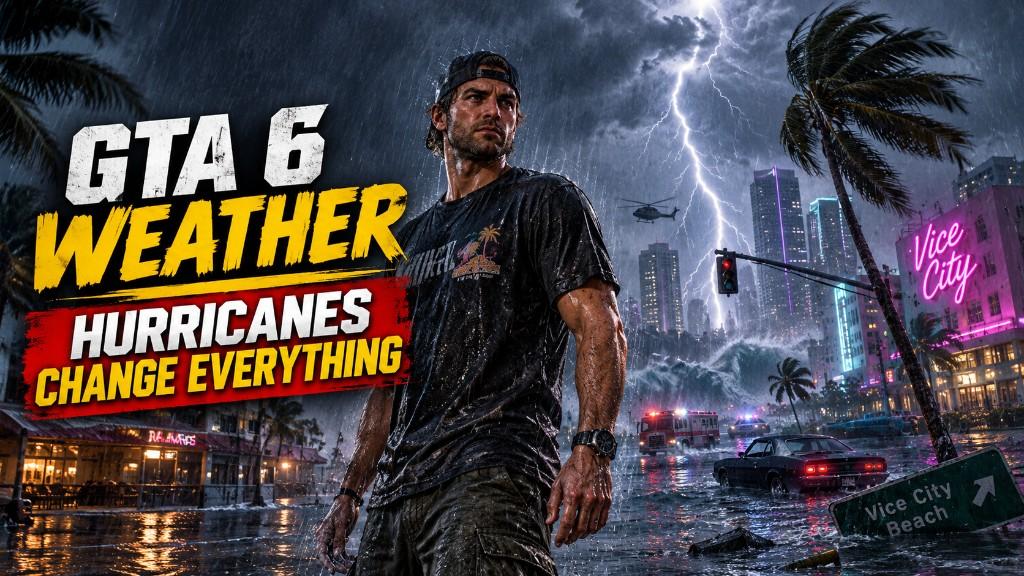
With Vice City heavily inspired by southern Florida, severe weather isn't just cosmetic backdrop—it is a core element of the region's identity. Technical details from Rockstar art directors and developer previews confirm that GTA 6 features an advanced weather system capable of simulating tropical storms, heavy gales, and full-scale hurricanes.
Here is how severe weather events like hurricanes and tropical storms could fundamentally change how you play GTA 6.
Aerial & Maritime Navigation Become High-Risk Thrills
In previous GTA entries, flying a plane through a rainy sky meant lower visibility and minor turbulence. In GTA 6, severe weather alters real-time vehicle mechanics.
Flight Dynamics & Structural Damage
In previous entries, flying through rain meant minor visibility drops. In GTA 6, high-velocity hurricane winds and microbursts force players to actively fight severe crosswinds. Lightweight aircraft risk structural turbulence damage or engine stalling, requiring precise joystick correction. Navigating the skies during a tropical squall shifts from a casual shortcut into a high-risk, white-knuckle test of pilot skill.
Realistic Ocean Physics
Coastal waters react dynamically to shifting barometric pressure and gale-force winds. Open-sea navigation during a full-scale hurricane throws vessels into towering, physics-driven swells that can capsize smaller watercraft or smash them against docks. Meanwhile, mainland geometry and breakwaters create distinct current variations, forcing captains to navigate sheltered bays or risk being swept into dangerous offshore currents.
Dynamic Evacuation & NPC AI Shifts
When severe weather rolls across Vice City, Rockstar's upgraded AI transforms the open world into a reactive disaster zone. As hurricane warnings broadcast and skies darken, NPCs don't just react to the rain—they alter their entire daily routines. Civil defense sirens trigger organized coastal evacuations, causing mass panics, crowded gas stations, and abandoned storefronts. This sudden demographic shift turns bustling commercial districts into quiet, prime targets for opportunistic heists.
Shelter-Seeking Behaviors
Pedestrians no longer simply pull out umbrellas when a tropical storm breaks; they dynamically evaluate nearby environments for cover. NPCs sprint toward open building lobbies, scramble under awning structures, or crowd inside transit stations to escape rising winds. If a full-blown hurricane hits, street-level foot traffic vanishes entirely as civilians lock down indoors, leaving Vice City feeling authentically desolate and eerie.
Altered Traffic Patterns
Torrential downpours disrupt everyday road networks across Leonida. Drivers drop their speeds, switch on hazard lights, or make reckless U-turns to avoid low-lying flood zones. These shifting traffic dynamics create sudden bottlenecks on major highways and urban intersections, forcing players to dynamically adapt their getaway routes, dodge abandoned vehicles, and rethink high-speed police pursuits during severe weather events.
Road Conditions and Driving Mechanics
Rain in Vice City isn't just a screen filter; it interacts directly with the terrain.
When a tropical storm hits, low-clearance sports cars risk stalling or hydroplaning through flooded intersections. Off-road vehicles, SUVs, and lifted trucks will serve a distinct tactical purpose during major storm events.
Map Alterations & Environmental Hazards
Severe hurricanes don't just change the sky; they physically transform the state of Leonida. As extreme storms crash ashore, storm surges breach coastal seawalls, submerging low-lying beach neighborhoods and turning city streets into navigable waterways. High-velocity winds tear away billboards, snap power poles, and uproot mature trees. These dynamic terrain transformations create temporary environmental hazards that continuously reshape navigation routes, tactical cover, and open-world exploration opportunities.
Debris & Obstacles
Hurricane-force gales convert everyday urban clutter into dangerous road hazards. High winds strip palm fronds, tear down metal signage, and scatter loose construction materials directly across major highways and residential streets. Striking heavy fallen debris at high speeds damages vehicle suspension, punctures tires, or causes fatal roll-overs, turning fast-paced high-speed pursuits into treacherous navigation tests where drivers must react constantly.
Localized Power Outages
Extreme lightning strikes and gale-force winds frequently knock out power grids across specific districts of Vice City. When power transformers blow, entire neighborhoods are plunged into complete pitch-black darkness. This localized blackout disables streetlights, security cameras, and traffic signals, creating ideal stealth conditions for high-stakes night-time break-ins while simultaneously making high-speed driving through unlit intersections incredibly hazardous.
Strategic Heist Execution & Tactical Weather Planning
Severe weather events in GTA 6 open up a whole new layer of tactical planning for open-world score execution. Rather than waiting for clear skies, smart players can monitor weather forecasts and synchronize high-stakes heists with incoming hurricanes. Pitch-black blackout conditions, pounding rain, and roaring gales provide natural tactical advantages, turning a brutal storm into the ultimate cover—provided you plan your approach and escape routes around the shifting elements.
Stealth in Severe Weather
Torrential downpours and thick fog significantly impair guard visibility, shrinking security patrol cones and sightlines. Meanwhile, continuous thunder claps and howling winds drown out the noise of footsteps, lock-picking, and unsuppressed gunshots. Executing stealth infiltration during a raging squall allows players to breach high-security facilities, disable exterior alarms, and slip past rooftop guards undetected without needing specialized suppressed weaponry.
Getaway Complications
While a tropical storm offers ideal cover during a break-in, escaping the scene becomes exponentially chaotic. Torrential rain limits visibility on getaway roads, flooded streets cause heavy hydroplaning, and high-velocity wind gusts make helicopter extractions virtually impossible. Players must balance the stealth perks of a storm against dangerous getaway hazards, forcing quick pivots to heavy off-road vehicles or sturdy watercraft.
Final Thoughts
By elevating weather from visual polish to a reactive physics engine, Rockstar Games ensures that Vice City feels like a living ecosystem. Hurricanes and tropical storms won't just look breathtaking; they will dictate how you drive, fly, execute heists, and navigate the world of GTA 6.